
The Origins of Yoga

Yoga is one of the oldest continuous living traditions in human history. Its origins can be traced to the Indus Valley Civilization (3300-1900 BCE), where seals depicting figures in meditative postures have been discovered at sites like Mohenjo-daro and Harappa. The word "Yoga" itself comes from the Sanskrit root "yuj," meaning to yoke, unite, or harness — expressing the fundamental purpose of yoga as the union of individual consciousness with universal consciousness, of the finite self with the infinite Self. The Rigveda contains early references to Yoga-like practices, and the Upanishads develop these into a sophisticated philosophical framework. The great systematizer of Yoga, however, was the sage Patanjali, who compiled the Yoga Sutras (approximately 400 CE) — 196 concise aphorisms that define, categorize, and prescribe the practice of Yoga in its most complete and systematic form.
Patanjali's Yoga is known as Raja Yoga or Ashtanga Yoga — the "Royal Yoga" or "Eight-Limbed Yoga." The eight limbs are: Yama (ethical restraints — non-violence, truthfulness, non-stealing, celibacy, non-possessiveness), Niyama (personal observances — cleanliness, contentment, discipline, self-study, surrender to the divine), Asana (physical posture), Pranayama (breath control), Pratyahara (withdrawal of senses), Dharana (concentration), Dhyana (meditation), and Samadhi (absorption — the state of union with the object of meditation and, ultimately, with the cosmic Self). This eight-step path addresses every dimension of human existence — ethics, body, breath, senses, mind, and consciousness — making it one of the most comprehensive technologies of human development ever devised.
The Six Schools of Indian Philosophy

Indian philosophy produced six classical orthodox schools (Astika Darshanas) — Nyaya, Vaisheshika, Sankhya, Yoga, Mimamsa, and Vedanta — each representing a distinct and sophisticated approach to the fundamental questions of existence: What is real? What can we know? How should we live? What is the Self? What is liberation? The Nyaya school developed India's rigorous tradition of logic and epistemology — its analysis of valid sources of knowledge (Pramanas), fallacies in reasoning, and methods of debate are comparable in sophistication to Aristotelian logic and were developed independently in roughly the same historical period. The Vaisheshika school developed a sophisticated atomic theory of matter — describing atoms as the fundamental, indivisible units of physical reality — that in many respects anticipates Democritus and modern atomic theory.
The Sankhya school articulates one of philosophy's most elegant frameworks: the distinction between Purusha (pure consciousness, the witnessing self) and Prakriti (nature, matter in its most subtle form). All of manifest existence — from the subtlest intellectual functions to the grossest physical matter — is understood as evolutes of Prakriti, while Purusha remains eternally unchanged, uninvolved, and luminously aware. The suffering of ordinary human life arises from the confusion between Purusha and Prakriti — from mistaking the contents of consciousness (thoughts, feelings, perceptions) for the consciousness itself. Liberation arises from the clear discrimination (Viveka) between these two — from the recognition of oneself as pure witnessing awareness rather than any of its contents. This framework is the philosophical basis of all meditation practices and remarkably parallels modern neuroscientific investigations of consciousness and the "observer effect" in quantum physics.
Advaita Vedanta: Non-Dual Wisdom

Among all schools of Indian philosophy, Advaita Vedanta — the non-dual philosophy systematized by the 8th-century sage Adi Shankaracharya — stands as the most radical and the most influential. Advaita (meaning "not two") asserts that there is ultimately only one reality — Brahman, the infinite, undivided, self-luminous consciousness — and that the apparent multiplicity of the world and the apparent individuality of persons are not absolutely real but are superimpositions on Brahman, like waves on the ocean. The individual self (Atman) is not separate from Brahman but is identical with it — "Aham Brahmasmi" (I am Brahman) is one of the four Mahavakyas (Great Sayings) of the Upanishads expressing this identity.
Shankaracharya traveled the length and breadth of India, establishing four mathas (monastic centers) at the four geographic corners of the subcontinent — at Sringeri (south), Dwaraka (west), Badrinath (north), and Puri (east) — to propagate Advaita philosophy and Vedic learning. He debated and, according to tradition, defeated adherents of Buddhist, Jain, and other philosophical schools, reasserting the authority of the Upanishads and establishing Advaita as the dominant philosophical framework of Indian thought. His commentaries on the Upanishads, the Bhagavad Gita, and the Brahma Sutras remain among the most studied philosophical texts in India today. Advaita's resonance with modern physics — particularly with the Copenhagen interpretation of quantum mechanics (which asserts that the observer and the observed cannot be ultimately separated) and with the cosmological principle of a unified field underlying all matter — has attracted the interest of physicists including Erwin Schrödinger and Werner Heisenberg.
Scientific Validation of Yoga
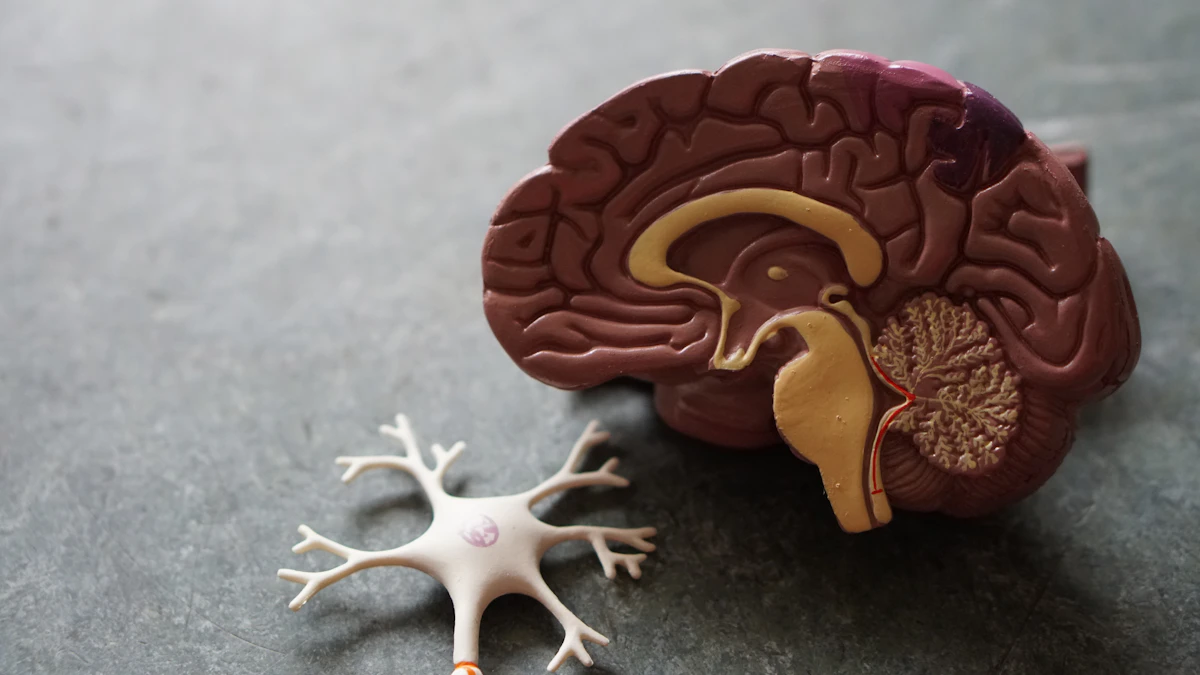
The past three decades have seen an explosion of scientific research on Yoga and meditation, producing a compelling body of evidence for their health benefits. Studies published in leading medical journals including The Lancet, JAMA, and the New England Journal of Medicine have demonstrated that regular Yoga practice reduces blood pressure, improves cardiovascular function, enhances respiratory efficiency, reduces chronic pain, improves sleep quality, and reduces symptoms of anxiety and depression. Mindfulness meditation — derived directly from Yogic and Buddhist practices — has been validated as an effective treatment for stress-related disorders, chronic pain, addiction, and depression, and is now routinely recommended by physicians and incorporated into hospital-based programs worldwide.
Research on meditation using advanced neuroimaging techniques (fMRI and EEG) has demonstrated structural and functional changes in the brains of long-term meditators — including increased gray matter density in the prefrontal cortex (associated with executive function and emotional regulation), increased thickness of the insula (associated with interoception and empathy), and changes in the default mode network (associated with rumination and self-referential thinking). A landmark study by Sara Lazar at Harvard Medical School found that long-term meditators had measurably thicker cortexes in regions associated with attention, interoception, and sensory processing — suggesting that meditation literally reshapes the brain. These findings validate Patanjali's ancient claim that systematic Yogic practice transforms not just behavior but the very structure of consciousness.
Yoga's Global Revolution

Today, Yoga is practiced by an estimated 300 million people worldwide, making it one of the most widely adopted wellness practices in human history. The International Day of Yoga, celebrated annually on June 21 since 2015 following India's proposal at the United Nations, has brought Yoga to every continent and virtually every country. The global Yoga industry generates revenues exceeding $80 billion annually through classes, retreats, teacher training, equipment, and media. In the United States alone, over 36 million people practice Yoga, and it has been adopted in settings ranging from corporate wellness programs to military resilience training to school curricula for children's emotional regulation.
This extraordinary global success is a testament not only to Yoga's practical effectiveness but to the universality of the insight at its core: that human beings everywhere share the same fundamental longing for wellbeing, clarity, and freedom from suffering, and that the ancient Indian tradition offers genuinely effective methods for cultivating these qualities. The fact that Yoga has leapt across culture, language, and time to become a global phenomenon in the 21st century confirms what India's sages always maintained — that the truths of Yoga are not culturally specific but are expressions of universal human nature. India has given the world not merely a set of physical exercises but a complete science of the human being — a science that is only now beginning to reveal its full depth and relevance.